Into the Fire Disaster Events and Catastrophe Mechanics
The volcano does not pause for your loadout. Learn how the catastrophe escalates and when to change your plan mid-run.
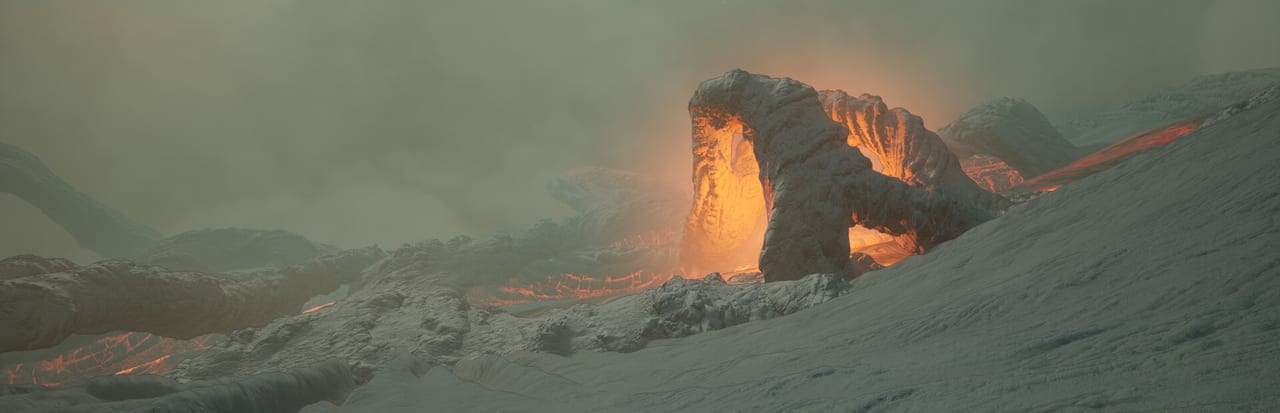
Every Into the Fire session plays out against a catastrophe that does not care about your gear score. The volcano is the dungeon, the timer, and the antagonist simultaneously. This page explains how the disaster systems work — the threat meter, the escalating events, and what happens when the island decides to do something extreme.
Read the volcanic hazards guide for field-level threats during expeditions. This page covers the macro catastrophe: the system that makes every expedition different from the last.
The threat meter — camp is always at risk
The most important thing Into the Fire does differently from other extraction games: the hazard does not pause when you are in camp. The threat meter ticks whether you are on an expedition or polishing your axe.
Playtest summaries describe a visible threat value in the daily report. The meter rises based on volcanic activity across the archipelago — not just the district you are currently running. If the Ruins are having a bad week, the threat number affects your camp even if you never go near the Ruins.
High threat means:
- More volatile hazard conditions across all districts
- Camp events that can damage rooms or reduce morale faster
- Pressure to extract successfully because a failed run on a high-threat day has compounding consequences
The camp hub guide explains the camp systems affected by threat. This page explains the field experience of running in a high-threat window.
How the eruption reshapes the map
Store copy describes a dynamic map that changes between runs. Playtest footage confirms: lava flows reshape terrain, ash alters visibility zones, and structural collapses open or close routes. The map you learned last week is not the map you have today.
This is not a scripted event system. Starward describes it as an outcome of the chain-reaction volcanic model. Multiple active vents, seismic activity, and lava pooling create emergent path changes. The implication for gameplay:
- Route knowledge is per-run, not permanent
- Scouting the entry route is always worth doing even on familiar districts
- Vertical routes (ladders, ziplines, high bridges) become more important as ground routes disappear
- The extraction guide covers route adaptation under pressure
Major events — when the island does something extreme
Playtest notes reference specific catastrophic event types that occur during runs. These are distinct from the ambient hazards covered in the volcanic hazards guide:
Seismic swarms — clusters of earthquakes that shorten the effective window in a district. When the seismograph reads a swarm pattern, the route ahead is changing faster than normal. Playtest patches reduced earthquake duration from 420 to 300 seconds in response to player feedback about timer pressure.
Ash surges — visibility events that change ash-covered zones from navigable to hazardous. Life-sign detectors and blowers become critical equipment rather than optional gadgets. See gadgets tier list.
Structural cascade failures — when an earthquake hits a district that has already taken damage from bombs or fire, the structural collapse patterns are more severe. A building that survived one earthquake may not survive two.
Volcanic gas release — referenced in store copy as a district-level atmospheric hazard. Requires filters or shields if your build has them. Gas zones appear without a building to hide in, which makes sleds and open-ground mobility more important.
The escalation curve
The game has a difficulty arc across Early Access. Starward has described the Early Access period as a time where the volcano gets harder as more survivors join camp and the settlement becomes a larger target. This is consistent with the threat meter description above.
Early game: lower threat, more forgiving timers, fewer simultaneous hazard types.
Mid game: higher baseline threat, more district volatility, survivors adding story pressure.
Late game: maximum threat potential, complex multi-hazard districts, camp events that require returning early.
The implication for planning: do not treat the early-access economy the same way you treat a fully released game. The optimal strategy in week one is different from the optimal strategy in month three.
Running in a crisis window
When threat is high, the rules change:
- Pack lighter — faster extraction beats maximum loot. See expedition loadouts for crisis kit advice.
- Take the RV point over the scenic route — do not add navigation time to an already compressed window.
- Skip non-critical survivors — the survivor priority card gets stricter when the meter is red.
- Monitor the seismograph continuously — it is your early warning system for major events.
- Leave one tank slot open — coming home with zero water is a failure state, not a successful extraction.
What the playtest notes say about events
Patch notes from playtest waves have addressed:
- Earthquake duration tuning (420s to 300s in one patch)
- HUD and radio callout improvements for bomb warnings
- SFX changes to make fire spread audio more readable
- Changes to the threat meter’s visibility in the camp UI
The playtest notes page tracks these changes as they land. Check it before a major session if you are playing a build that has been patched since your last run.
The camp emergency exit
When a major event hits a district while you are in it, the normal RV point may become inaccessible. Playtest footage references an emergency exit from camp as a fallback that activates when the primary extraction point is compromised.
The emergency exit is not a teleport. It is a timed path that appears at a different location from the primary RV. If you are in a high-threat district and the primary route is blocked, do not wait for the primary RV. Move to the emergency point.
The extraction guide covers emergency protocol in more detail.
Why the catastrophe matters more than any enemy
Into the Fire is designed so that the volcano is the enemy you cannot kill. No weapon you bring to Dante’s Archipelago can stop the eruption. The game is about working within that constraint: extracting as much as the conditions allow, then coming back and using what you brought to make the camp more resilient.
The disaster systems are the reason the game can stay single-player and still feel dangerous. There is no AI director needed. The island is the director.
Read volcanic hazards for the field-level threats. Read camp hub for how the camp responds to the macro catastrophe. Read this page again after your first hundred successful extractions — the escalation curve becomes more visible from the other side.
Frequently Asked Questions
Quick answers to the most common questions.
Can I stop the eruption?
No. The catastrophe is the setting. Your job is extraction, not prevention. See the story lore for how the narrative frames the eruption.
Does high threat mean I should stay in camp?
No. Threat ticks whether you are out or in. A successful extract on a high-threat day reduces pressure on camp more than staying home does. The risk-reward calculation changes, not the fundamental rule.
What is the hardest event type in playtests?
Multi-hazard stacks on three-skull districts. When ash, quakes, and bombs overlap on Crimson Pass, the decision tree compresses to a single question: what is the fastest route to the RV?
Does the emergency exit always appear?
Playtest references suggest the emergency exit activates when the primary RV is blocked by a major event. It is a fallback, not a guaranteed alternative. The primary extraction plan should always be the primary RV.