How Extraction Works in Into the Fire
A rescue is only real if the vehicle leaves with you still on it.
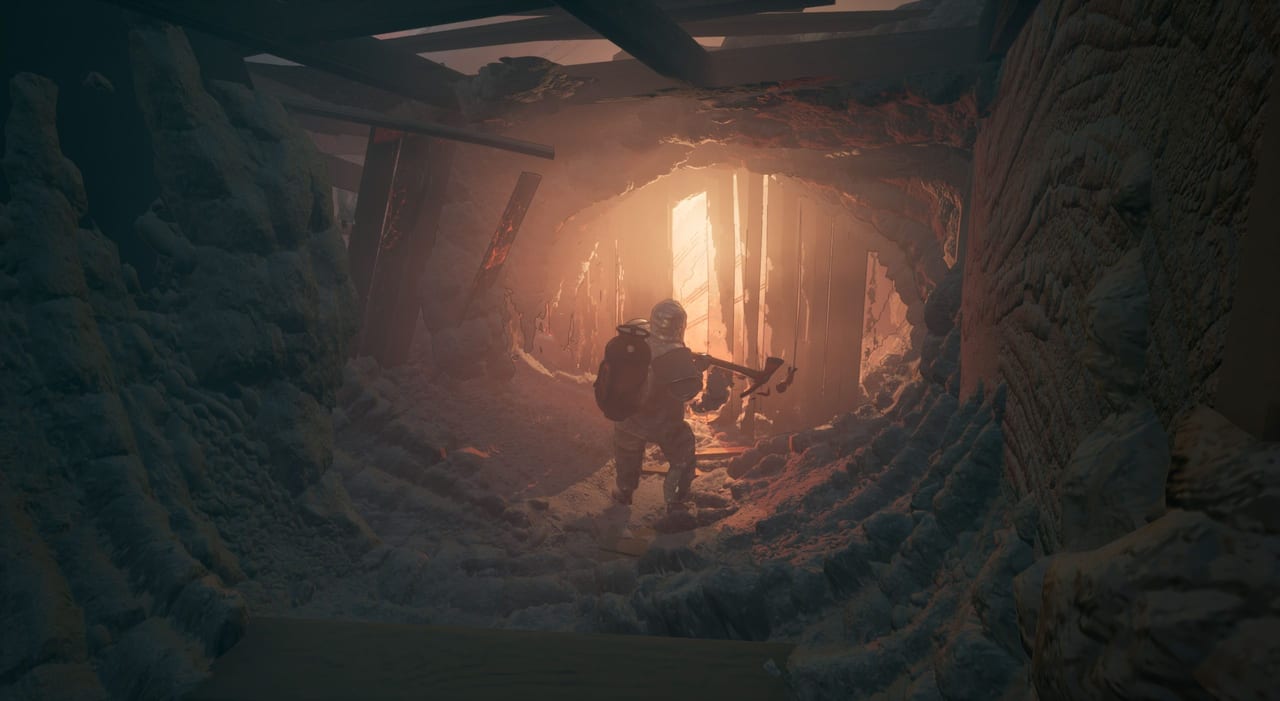
Extraction is the verb that makes Into the Fire an extraction game instead of a disaster walking sim. You can clear fire, find a family, and still fail the mission if the RV leaves without you. Starward’s 2025–2026 trailers and the New Mission gameplay reveal show the same spine: enter a district, collect lives and supplies, watch the cataclysm escalate, and punch a route to the extraction point. This page is the practical version of that spine.
The announced design is single-player. Nobody is coming to clutch your bag. Your only backup is the kit you packed in the expedition planner and the discipline you learned in Getting Started.
The loop, stripped of trailer language
- Brief in camp. Note the district, skull rating, and whether the job is a named rescue (Zoe in New Sindra, for example) or a resource run.
- Enter with a kit that can breach, extinguish, and carry. See weapons and gadgets.
- Scout a path to the RV before you load yourself with bodies. The way in is not always the way out once fire has moved.
- Grab the objective. People first, animals next, relics if the clock still loves you.
- Call or reach extraction. Playtest VO mentions another pass if you miss the RV — treat that as a last chance, not a plan.
- Survive the walk. Earthquakes, volcanic bombs, lava tongues, and fire spirits all spike on the way home. Details in volcanic hazards.
If any step feels optional, it is step four’s loot half. Lives upgrade the hub. Relics flavour it. A wiped run upgrades nothing.
Time is the real ammo
Starward has said they want time to feel like a storytelling device, not a punishment meter. In practice, playtests still punish lingering. Fire spreads. Temperatures rise. Paths collapse. The longer you stay, the more the district becomes a different map. That is why hesitation is listed as a fail state in preview coverage: the window does not wait for a perfect search.
Open-playtest notes also show Starward tightening hazard telegraphing. Volcanic bombs and earthquakes gained stronger HUD warnings, SFX, and radio callouts. Earthquake duration was cut from 420 seconds to 300 seconds in one December wave. Use those tells. If the radio is screaming and you are still prying a crate, you have already decided the extraction does not matter.
Routes: streets, interiors, Ruins
Early districts play like ruined resort towns and city blocks: wide approaches, burning interiors, planks over pits. The Ruins, highlighted for the 2026 trailer, add tight corridors and vertical building-and-cave routes. Pack mobility for that space: rope systems, ziplines, sleds, and stamina for climbs. A loadout that only dumps water on fire will stall on a third-floor carry.
Breach tools matter because so much of the loot and so many of the trapped civilians sit behind doors and weak walls. The developer diary about expedition gear is almost comic: if the axe dies in a few swings, whole buildings become scenery. Durable and Breacher perks exist because of that joke. Pair them with the gadgets ranking if you expect to fight interiors.
Greed checks that actually fail runs
- One more house. Fire will take the alley you needed.
- Two more bodies than you can plank. Carry weight and endurance are playtest skills for a reason. Read rescue.
- Combat with a spirit when the RV is live. Extinguish to pass, do not farm.
- Relic digging in ash while the threat skull is already ugly. Ash blowers and life-sign detectors are for people under the crust, not for souvenir runs at minute 20.
- Ignoring camp capacity. Extracting six people into a camp with no water is a delayed wipe. Camp hub and survivor priority exist so you do not learn that on day four.
How difficulty shows up
Playtests talk in skulls and a threat value that ticks with each day. Three-skull Crimson Pass runs mix earthquakes and lava in the same breath. That is not the first-hour map. Climb skulls only after you can hit the RV on a one-skull street with a survivor still in your arms.
Starward’s open tests logged tens of thousands of successful runs and thousands of rescued people. Those numbers are community-wide, not a promise that your save will look like that. Your personal metric should be simpler: did the vehicle leave with the objective, and can the camp eat tonight?
Extraction and the story
Failure is content. Interviews state that missed rescues echo in the hub: survivors react, systems open or stay locked, and the island’s myths creep in as you go deeper for answers. That is why this wiki refuses to treat extraction as a loot spreadsheet. The roadmap still promises more locations, traversal toys, and story beats during Early Access. The extraction verb will remain the same: get out with something that can live.
Practice plan for playtests
- Run a district once with zero optional loot. Time the RV.
- Run it again with one extra relic. Note where fire cut the first path.
- Run a named rescue from the priority tool and refuse side loot.
- Only then try a Ruins-style vertical map.
- After each return, log food, water, and morale before you craft anything fancy.
If a future patch adds a second extraction vehicle or changes the RV voice line, this page will follow the playtest notes. Until then, assume one clock, one vehicle, and a volcano that does not care about your backpack.
Frequently Asked Questions
Quick answers to the most common questions.
What happens if I miss the RV?
Playtest radio chatter suggests another pass may be possible. Treat it as an emergency, not a farming trick. Dying still drops the run.
Is extraction PvP?
No. Into the Fire is a single-player expedition. The island is the other player.
Should I extract empty-handed if I am on fire?
Yes. An empty return still lets you recraft. A wipe spends the kit and the day.
Do relics count as a successful extract?
They help camp and lore, but Starward's pitch measures success in lives first. Relics are bonus, not the mission.